6 Step Nutrition
Step 6: Calorie and Protein Target
Step 6 is the same as Step 5, except now you are going to eat a set amount of protein every day. Step 6 is the final step in this basic nutrition program.
If you have not purchased a digital food scale - Please do that now! It's required for this step.
This one on Amazon is very cheap and has excellent ratings.
You no longer need to use a meal plan if you're at this step. However, the meal plans are still very helpful because they provide you with a list of nutritious foods that will help you stay full and energized. While you can eat whatever you want in this step, it is very hard to stay full if you aren't eating enough protein, fiber, fruits and vegetables.
IF you want to choose a meal plan in this step to assist you, then do so according to your desired weight.
NOT according to how much you weigh right now. For example, if you want to weigh 135 lbs. then choose the meal plan that says meat or veggie and "100-150lbs."
You always have the choice to go slower and choose a different meal plan. For example, you could could weigh 220 lbs., DESIRE to weigh 140 lbs., but still choose the meal plan for 150-200lbs and that's okay.
Do what's comfortable for you.
The meal plans in this section are exactly the SAME as in the previous steps. Follow the same meal plan from the previous step but remember you do not need a meal plan once you start counting your calories.
How many calories should you eat everyday?
In order to find out how many calories you need to eat everyday, you'll be using your App to help you. The App should already have a set a caloric goal for you to hit, when you started tracking your calories in Step 4.
Make sure your activity level is set to NOT VERY ACTIVE in the App.
The number you see in the App is your calorie target.
The goal is to eat that many calories every day. It can be difficult to eat EXACTLY that number, and that's why we have two other numbers to be aware of in this step. These are the "calorie ceiling" and the "calorie floor." You should not eat more than 100 calories over your calorie target. That number is known as your calorie ceiling. Also, you should not be eating less than 100 calories under your calorie target. This number is called the calorie floor.
For example, if your calorie target is 2000, then you should be eating between 1900 - 2100 calories every single day.
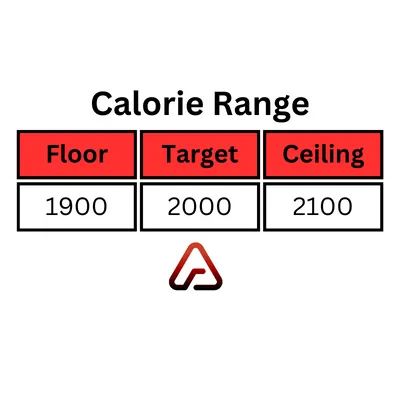
Why do we have a floor, target, and ceiling? Because if you eat too much, you won't lose weight. Also, if you eat too little, your body can go into "starvation mode" and start hanging onto fat because it thinks you're starving. This would also prevent you from losing weight. We don't want either of these things to happen so stick to your calorie target and don't go under that calorie floor or over that calorie ceiling!
Step 5 was designed to further develop your skill of measuring and tracking your food, while you continue to reap all the benefits of living a healthier lifestyle.
In Step 6 we are setting a protein target in addition to the calorie target that was set in the previous step. That means every day you will need to eat a certain amount of calories AND a certain amount of protein every day, based on your weight. Why?
Protein is a vital macro nutrient required so your body can function well. Put very simply,
protein keeps you full. If you want to be full, you need to eat plenty of protein.
Moreover, eating the right amount of protein means you will preserve your muscle mass as you lose weight.
You don't want to lose muscle as you lose weight because that will hinder your weight loss progress - eating the right amount of protein ensures you can maintain muscle mass and lose fat at the same time. If you lose muscle then your metabolism will go down and we don't want that! This is because the muscle on your body burns calories faster than the fat does.
Calculating Your Protein Target
Your daily protein target should be about 0.6 - 0.8 grams of protein per pound of body weight.
That means if you weigh 200 lbs. you would multiply:
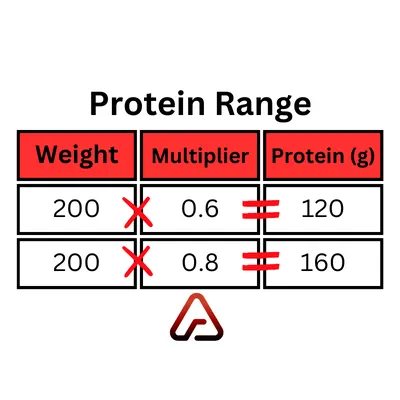
Then your protein target would be between 120 - 160 grams per day. You get to decide what's best for you based on how much you've been eating already.
If your protein intake has been very low, it might be unreasonable to aim for 160 grams per day. Do what's comfortable for you and set a target as your minimum amount of protein to eat everyday.
Now you know how to calculate your protein target.
Luckily, the Macro's First App calculates your protein target for you. Use that number for your protein target.
If weight loss is your ultimate goal, then this is as far as you need to go! Maintaining a caloric deficit and eating the right amount of protein will be enough to help you reach your goal.
Ever heard of the tortoise and the hare? There's a reason why the tortoise beats the hare. Slow and steady progress always beats overdoing it and burning it. The same thing goes for weight loss. Do what's comfortable for you and don't overdo it. That's how you create sustainable, lifelong change.
The plan is the plan for a reason. Trust in the process and have fun participating in the community while you build the skills and confidence necessary to change your life permanently!
Macro's First Sign Up
Measuring What You Eat
Tracking in the App
Here are your 5 Daily Authentic Actions:
1. You're encouraged to weigh yourself every morning and write down that number somewhere so you can track your weight. Share in the group if you're comfortable with it.
2. You're encouraged to share pics of everything you eat in the community. This increases accountability, helps track what you eat, allows others to get inspired by your healthy meals, and let's us celebrate your healthy eating.
3. Set a step goal to hit everyday that's suitable for your current level of activity. Share your steps at the end of the day every day. Be sure to download a step counter App on your phone if you need one or use a wearable device like a Fitbit.
4. Share a win in the "Celebrate" section of the community. It could be anything you did that day that you consider to be a win. Be sure to celebrate yourself for all of your accomplishments as often as you can.
5. Ask questions whenever you need help.